How to Fail Forward: Turning Business Setbacks Into Better Decisions
How to Fail Forward: Turning Business Setbacks Into Better Decisions
A setback can become useful only after the emotion is acknowledged and the experience is examined honestly. Failure does not automatically produce wisdom; reflection and changed behavior do.
If you are searching for how to fail forward in business, the useful question is not only what tactic to try next. It is how the decision fits the wider business: the offer, the customer journey, the economics, the systems, the team, and the founder’s capacity.

Why this matters now
Most business problems are connected. A sales issue can begin with positioning. A delivery issue can begin with a sales promise. A leadership issue can begin with unclear roles. Looking at the whole system prevents expensive fixes in the wrong place.
The goal is not complexity. The goal is a business that is easier to understand, easier to operate, easier to improve, and less dependent on heroic effort.
A practical framework
1. Separate the event from your identity
A failed launch, lost client, bad hire, or missed goal is information about an event, decision, or system—not a complete definition of the founder.
The strategic point is simple: the owner, standard, and next decision are made explicit rather than left to memory.
2. Reconstruct what happened
Review assumptions, timing, evidence, decisions, execution, communication, capacity, and external factors without rewriting the story to protect ego.
The practical implication is straightforward: the team can see what should happen next and leadership can review the result without recreating the work.
3. Identify the controllable lesson
Ask what should change in the process, decision rule, research, communication, skill, or review rhythm.
For a growing company, this matters because the process becomes measurable enough to improve instead of being discussed only when something goes wrong.
4. Create a new standard
A lesson becomes valuable when it changes how the business works next time.
The operating lesson is that the owner, standard, and next decision are made explicit rather than left to memory.
5. Re-enter the arena deliberately
Do not let one disappointment create permanent avoidance. Use the lesson to design a more informed next attempt.
In practice, the business gets stronger when the team can see what should happen next and leadership can review the result without recreating the work.
Common mistakes to avoid
- Calling every failure ‘learning’ without changing behavior. This usually creates more friction because the business responds to the visible symptom without strengthening the underlying decision, process, ownership, or standard.
- Blaming only external factors. This usually creates more friction because the business responds to the visible symptom without strengthening the underlying decision, process, ownership, or standard.
- Making a permanent strategic decision in the middle of an emotional reaction. This usually creates more friction because the business responds to the visible symptom without strengthening the underlying decision, process, ownership, or standard.
A useful rule: when the same problem appears repeatedly, stop treating it as a one-time incident. Repetition is often a signal that the business needs a clearer system, decision rule, role, or expectation.
What to do this week
- Write the facts of the setback without interpretation.
- List the three assumptions that proved wrong.
- Create one new decision rule for the next attempt.
Keep the action small enough to complete, but important enough to change how the business operates. Progress compounds when better decisions become repeatable behavior.
The Winners Circle perspective
The Winners Circle is built around a simple operating belief: sustainable growth becomes easier when founders strengthen Clarity, Systems, and Scale in the right order. Clarity defines the priority. Systems make execution repeatable. Scale increases capacity without multiplying chaos.
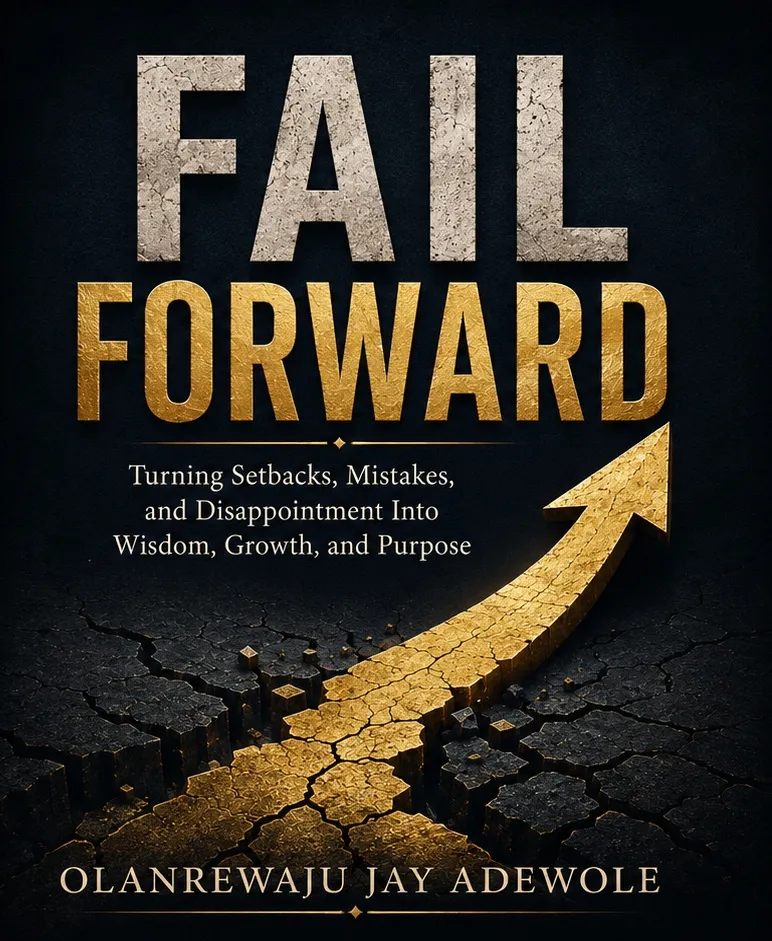
Explore Fail Forward and the Winners Circle book library for practical perspectives on resilience, leadership, business, money, purpose, and execution.
Next step: books
Need a starting diagnosis? Take the Winners Circle Growth Scorecard.
Looking for direct strategic support? Explore ways to work with Jay Adewole.
About The Winners Circle
The Winners Circle with Jay is a business growth and leadership platform for entrepreneurs who want stronger decisions, better systems, clearer positioning, and the capacity to scale with more control. The ecosystem includes coaching, transformation programs, live business strategy, books, podcast conversations, media, and practical growth resources.
